AI Research and Development for Laboratory Software
Laboratories generate a large amount of operational information every day. Samples, tests, results, reports, instruments, approvals, customer requests, and quality records all create valuable data that can support better laboratory decisions.
Lenava LIMS is already designed to centralize laboratory workflows and bring this operational data into a structured environment. As laboratory software continues to evolve, the next stage is not only about storing and managing data. It is also about helping users work with information in a smarter, more guided, and more efficient way.
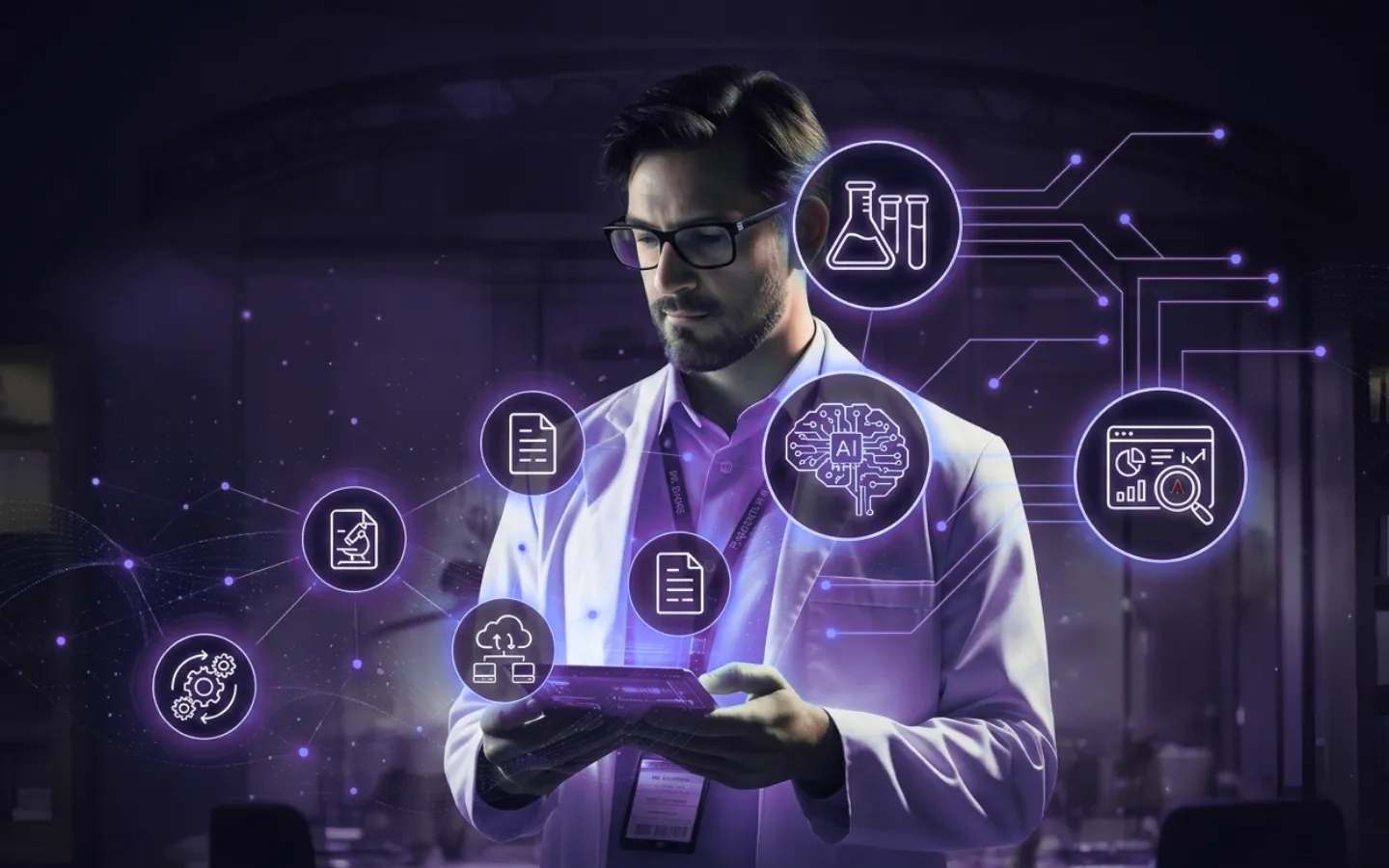
Lenava is actively investing in Research and Development (R&D) to advance AI assisted capabilities within Lenava LIMS.
This R&D direction is focused on supporting more intelligent interaction with laboratory data, workflow status, reports, and system knowledge, while keeping laboratory professionals in control of scientific, technical, and quality decisions.
A Practical Direction for AI in LIMS
AI in LIMS should not be treated as a replacement for laboratory expertise. Laboratory work requires professional judgment, validated methods, quality control, regulatory awareness, and responsible review by qualified people.
For Lenava, the value of AI is in helping laboratory teams access the right information faster, understand workflow context more clearly, and interact with structured operational data more effectively.
As part of this Research and Development (R&D) direction, Lenava is exploring AI assisted guidance and intelligent assistant concepts in a controlled and practical way. The focus is on helping users find relevant laboratory information, review workflow context, and work more efficiently with system knowledge without exposing unnecessary technical complexity.
Supporting Better Access to Laboratory Information
A laboratory information management system contains many layers of information. Users may need to understand sample status, locate reports, review workflow progress, check operational records, or access guidance related to laboratory processes.
Lenava’s AI Research and Development direction is focused on making this interaction more efficient. The goal is to help users work with laboratory information in a clearer and more guided way, especially when they need to understand context across different parts of the system.
This may support areas such as:
- faster access to relevant laboratory information
- clearer understanding of workflow status
- more guided interaction with structured operational data
- better access to system knowledge and process context
- improved visibility across reports, records, and daily activities
Responsible Development for Laboratory Environments
Laboratory environments require accuracy, traceability, security, and accountability. For this reason, AI development in LIMS must be practical and responsible.
Lenava’s approach is focused on supporting users, not replacing them. AI assisted capabilities should help users work more efficiently with information, while laboratory decisions, result validation, approvals, and compliance responsibilities remain under appropriate human control.
This is especially important for laboratories operating under quality systems, internal procedures, customer requirements, and audit expectations.
Part of Lenava’s Product Roadmap
The AI Research and Development direction is part of Lenava’s broader product roadmap for Lenava LIMS. It reflects a long term commitment to building a more intelligent laboratory information platform while maintaining a practical focus on real laboratory needs.
Lenava will continue to share updates as this AI Research and Development (R&D) direction moves forward, with a focus on capabilities that are useful, responsible, and meaningful for laboratory teams.
The goal is simple: help laboratories work with their data, workflows, reports, and system knowledge in a more intelligent and controlled way.